
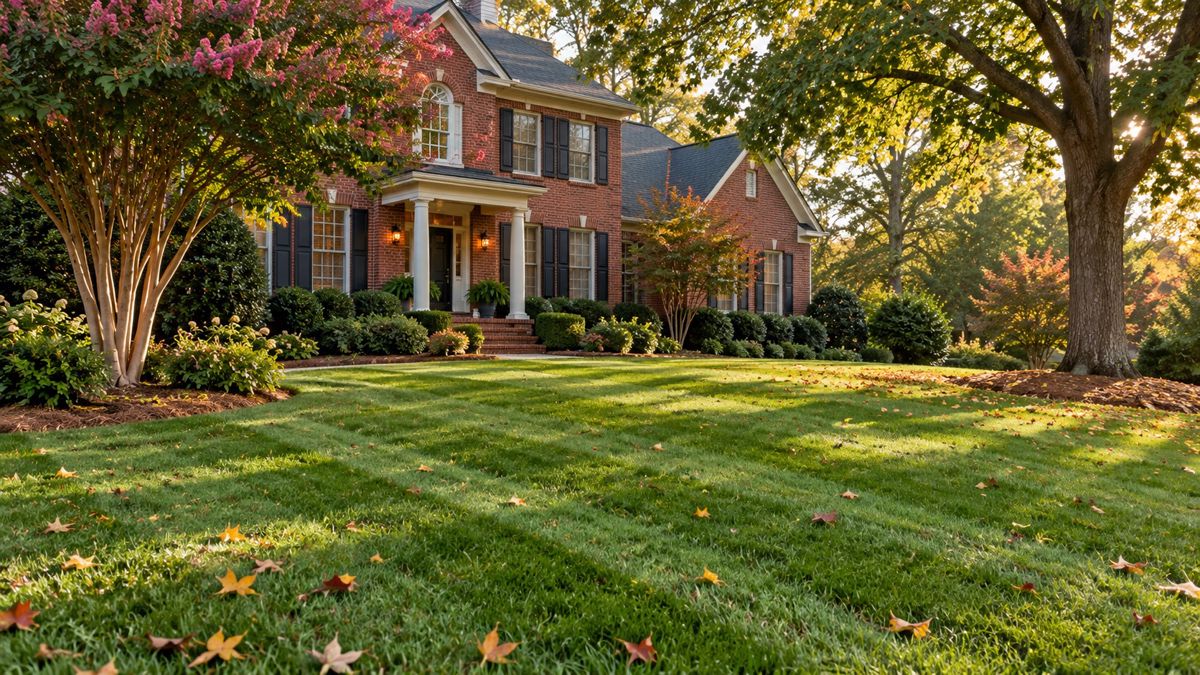
For most Richmond lawns, turf-type tall fescue is the safe choice. It stays green most of the year and handles shade better than the warm-season grasses. If your yard gets full sun all day and you do not mind a brown lawn in winter, zoysia or bermudagrass can be a better fit. The right answer depends on sun, soil and how much work you want to put in. The sections below explain each option.
Why is Richmond a hard place to pick a grass?
Richmond sits in what turf experts call the transition zone. Winters are cold enough to hurt some warm-season grasses, and summers are hot and humid enough to stress cool-season grasses. No single grass is perfect here. Every choice is a trade-off.
Add the soil to that. Much of the Richmond area has heavy red clay. It drains slowly, packs down easily and can set hard in dry weather. Many new subdivisions in Henrico and Chesterfield also have thin topsoil, because the good soil was scraped off during construction. Grass roots need loose soil to go deep, so soil prep matters as much as the grass type you pick.
Before you buy anything, walk the yard on a sunny day and note three things:
- How many hours of direct sun each part of the lawn gets
- Where water sits after a heavy rain
- How much foot traffic, pets and play the lawn takes
Is tall fescue the best choice for most Richmond lawns?
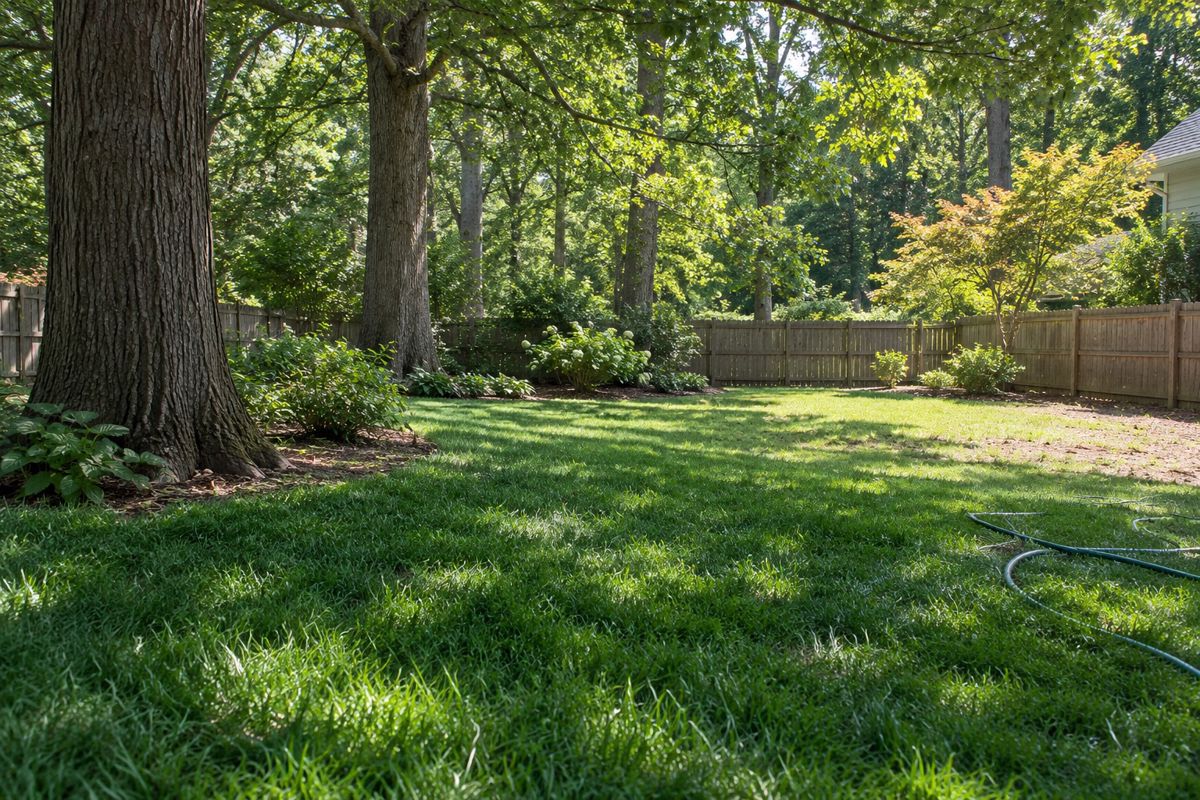
Tall fescue is the most common lawn grass in the area, and for good reason. It is a cool-season grass, so it stays green through the mild Richmond winter. It has deeper roots than other cool-season grasses, which helps in dry spells. It also tolerates partial shade, which matters in older neighborhoods with big oaks, maples and tulip poplars.
The downsides are real. Fescue struggles in the heat of July and August, and in humid weather it can pick up a fungus called brown patch. It does not spread much on its own, so thin spots usually need overseeding, most often in early fall. It also needs regular water in summer to look good.
Where fescue works well
- Yards with a mix of sun and shade
- Homeowners who want green grass in winter
- Lawns that get moderate foot traffic
Fescue is usually mowed fairly tall, often around 3 to 4 inches. Cutting it short in summer is one of the most common ways people damage it.
When should I choose zoysia or bermudagrass?
Zoysia and bermudagrass are warm-season grasses. They love heat and full sun, and they spread on their own to fill gaps. They also go dormant after the first hard frosts. The lawn turns tan or brown in winter and greens up again in late spring. Some people accept that. Others cannot stand it.
Zoysia makes a thick, soft, dense lawn that crowds out weeds well. It grows slowly, so it takes longer to fill in, and it handles light shade better than bermudagrass. It is often chosen for front lawns where looks matter.
Bermudagrass is tough and recovers fast from wear, which makes it popular for play areas. It needs a lot of sun. In shade it thins out quickly. In some colder winters it can also suffer winter damage in this region, so ask a local supplier which varieties hold up best.
Both grasses are hard to remove later, because they spread by runners underground. Think carefully before putting them next to a fescue lawn or a flower bed.
What about Kentucky bluegrass, ryegrass and seed blends?
You will see these on the shelf at garden stores. Kentucky bluegrass is a cool-season grass that makes a beautiful lawn in cooler climates, but it needs more water and care in the Richmond summer. It is usually used in blends rather than on its own here.
Perennial ryegrass sprouts quickly, which is why it shows up in many seed mixes. It is not as heat tolerant as fescue, so on its own it can fade by midsummer.
If you are buying seed, read the label. Look for a blend that lists turf-type tall fescue first and shows a low weed seed and filler content. Cheap mixes full of filler often disappoint.
Should I use sod or seed?
Both can work. The difference is mostly speed, cost and risk.
- Sod gives you an instant lawn. It holds soil on slopes, blocks weeds while it roots and can be laid in more months of the year. It costs more per square foot up front.
- Seed costs less, but it takes weeks to sprout and a full season to thicken. Heavy rain can wash seed off a slope, and weeds move in fast on bare clay.
Sod is often the better choice on slopes, near driveways where runoff hits, or when you want to host a gathering soon. Seed makes sense for large, flat areas where time is not a concern. For help with the actual work, see our page on sod installation in Richmond.
How do I prepare red clay and care for new sod?
Good prep is where most new lawns are won or lost. A typical process looks like this:
- Test the soil. The Virginia Cooperative Extension offers soil testing, and the results tell you what lime or nutrients the lawn needs.
- Remove the old lawn and weeds, and loosen the top several inches of clay.
- Mix in compost to help the clay drain and hold air.
- Rake the area smooth and grade it so water runs away from the house.
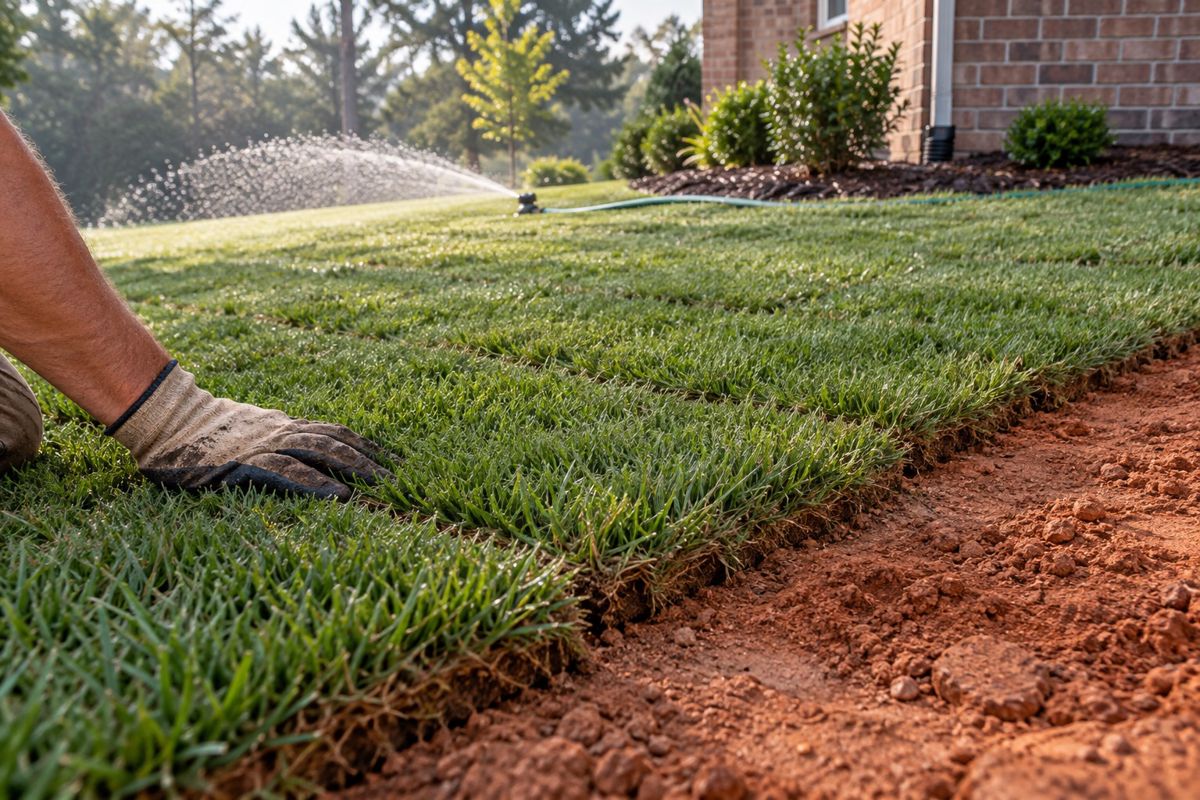
- Lay sod in staggered rows, press the seams tight and roll the lawn so the roots touch soil.
- Water right away, then keep it moist for the first couple of weeks.
After that, water less often but more deeply to encourage roots to grow down. Stay off the lawn as much as you can until it is rooted. You can check by gently lifting a corner. If it resists, the roots have taken hold.
Timing matters. Fescue sod is usually best laid in early fall or in spring. Warm-season sod does best when it goes down in late spring or early summer, when the soil is warm. Laying sod in the middle of a hot spell means extra watering, so plan for it.
Which grass fits your yard?
If you have mixed sun and shade, start with tall fescue. If you have a wide-open sunny yard and can live with a winter tan, look at zoysia or bermudagrass. Either way, spend time on the soil before you spend money on grass.
If you would like someone to look at your yard and quote the job in writing, we can help with sod installation and lawn replacement in Richmond. If you also want a sprinkler system to keep the new lawn healthy, see sprinkler and irrigation installation.