
Skip to content
  • Free written quotes
  • Local crews
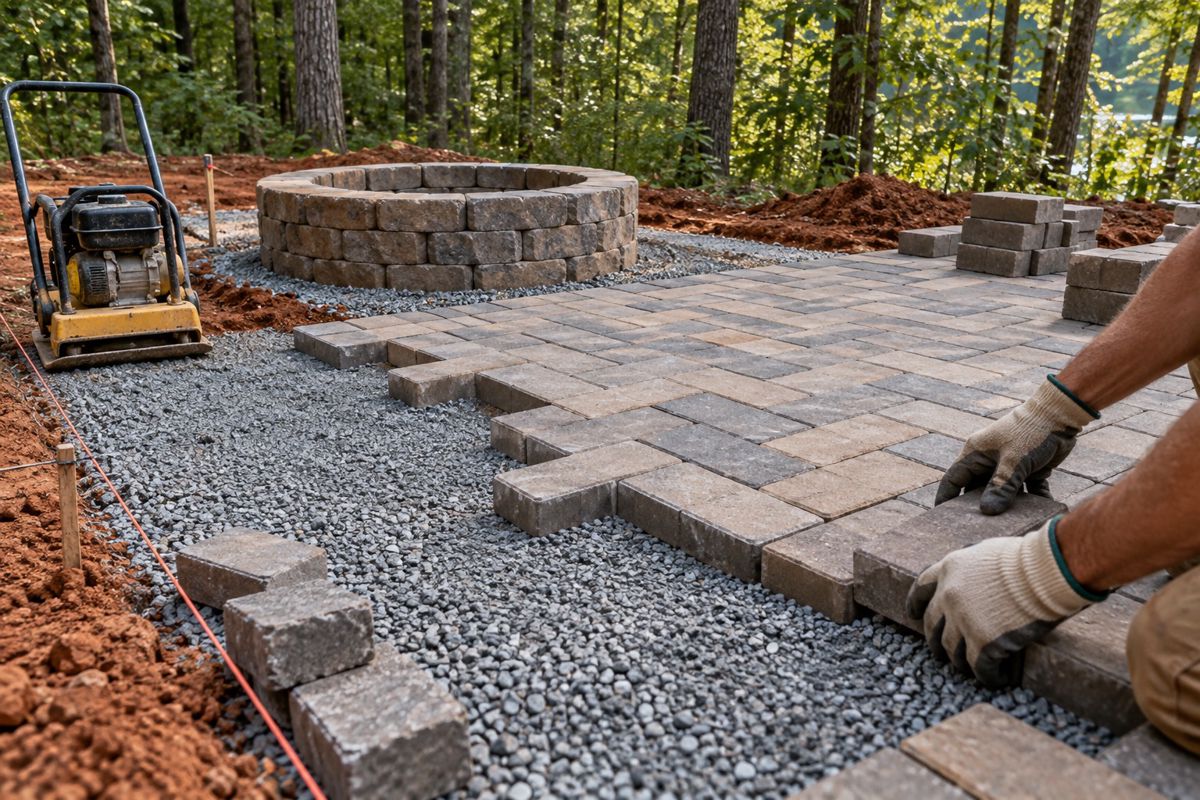
Paver patio and stone fire pit being built on a compacted gravel base

Hardscaping in Richmond, VA

Hardscape contractor in Richmond for patios, walks and fire pits

Paver patios and walkways need the right base to last on clay soil. We build them step by step and quote in writing.

  • Paver patios, walkways and fire pits
  • Base prep planned for Richmond clay
  • Written quote before work starts

Step 1 of 3

What do you need?

What does a hardscape contractor in Richmond actually do?

Hardscaping means the solid, non-living parts of a yard: patios, walkways, steps, edging, seat walls and fire pits. A hardscape contractor plans, excavates, builds the base and lays the surface so it stays level and drains well.

The surface is the part you see. The base is the part that decides how long it lasts. A paver patio is only as good as the compacted stone and soil under it. Skipping base work to save time is the most common reason patios sink, shift and grow weeds in the joints.

We build paver patios, walkways and fire pit areas for homes in Richmond and the nearby suburbs. If a patio will sit next to a slope, we may also suggest a short wall, and you can read about that on our retaining wall and drainage page. For the bigger picture of your yard, see landscape design.

Why does clay soil make paver base work so important?

Red clay swells when wet and shrinks when dry. That movement can lift and drop a surface placed right on top of it. Clay also drains slowly, so water can sit under a patio and soften the ground. The fix is a properly built base.

A typical paver base includes:

  • Excavation to remove topsoil and soft material
  • Compacted crushed stone in layers, often several inches deep, and deeper where vehicles or heavy loads are involved
  • A thin leveling layer of sand or fine stone for the pavers
  • Edge restraints to keep the paver field from spreading
  • Joint sand between pavers to lock them together

The finished surface should slope slightly away from the house, so water runs off rather than collecting against the foundation. In low areas, we may add drains or a gravel trench. Richmond sees heavy summer thunderstorms, so water control is part of the build, not an add-on.

What changes the price of a paver patio, walkway or fire pit?

We give written quotes after a site visit, not a flat price per square foot over the phone. The main factors are:

  • Size and shape. Curves and patterns take more cutting and time than a plain rectangle
  • Paver material. Concrete pavers, brick and natural stone have different costs and looks
  • Base depth and the amount of excavation, especially on slopes or in soft clay
  • Access for equipment and the distance material must be carried
  • Extras such as steps, seat walls, lighting, a gas line or a built-in grill area
  • Drainage work needed to keep the patio dry

A fire pit can be a simple ring on a paver pad or a built-in feature with seating. Wood-burning and gas pits have different needs. Gas needs a licensed gas fitter in most places, so we plan that separately.

Compare quotes by looking at base depth and materials, not just the total.

A small walkway may take a few days. A standard patio often takes about a week or a little more, depending on size and weather. Larger projects with steps, walls and drainage can take longer. We give a schedule estimate with your quote, and rain days can add time because wet clay is hard to dig and compact properly.

Hardscape work can be built through much of the year in Richmond, since winters are generally mild. We usually avoid working on soaked ground, because compacting a wet base gives a poor result.

If you want a patio ready for a certain season or event, tell us when you call. We will say plainly whether the date looks workable, rather than promise something the weather could undo.

What should I expect on the day, and what rules apply?

On day one, we mark the layout, call Virginia 811 for utility marks if not already done, and start digging. You will hear a plate compactor and see stone delivered. Over the following days, the base goes in, the pavers are laid, edges are set and joints are filled. We clean up at the end and show you how to care for the surface.

A few rules to check before you build:

  • Your HOA may require approval for a patio, fire pit or change to the back yard
  • Fire pits are covered by local fire rules, including distance from buildings and fuel type
  • Some structures, walls and gas work may need a permit. Ground-level patios often do not, but ask your local building office
  • Properties near streams or the James River may have extra rules for land disturbance

Call us when you plan to add a patio, replace a cracked concrete slab, or fix pavers that have sunk. For a lawn around the new patio, see sod installation, or return to the home page to see all our services.

Request hardscaping

Tell us what you need and we call you back.

No obligation.

Step 1 of 3

What do you need?

Questions about landscaping in Richmond

How deep should the base be for a paver patio in Richmond?

It depends on use and soil. Walking patios often use several inches of compacted crushed stone, while driveways need much more. Soft clay may call for extra depth. We decide after looking at the site and explain the plan in the quote, so you can compare base details with other bids.

Pavers or poured concrete, which is better?

Each has trade-offs. Concrete is a single slab and can crack as clay moves. Pavers flex a little, can be repaired by lifting and relaying a few units, and come in many styles. Pavers cost more in some cases. We are happy to talk through both options for your yard.

Do I need a permit for a paver patio or fire pit?

Requirements vary by locality. A ground-level patio often does not need one, but structures, tall walls and gas lines may. Fire pits are often covered by fire and setback rules. Call your local building and fire offices, and check your HOA covenants before you build.

Why do some patios sink or get weeds?

Usually the base was too thin, poorly compacted or built over soft soil. Poor drainage makes it worse by washing sand out from under the pavers. Weeds grow in joints that were not filled well or that lost sand over time. Good base work and joint sand reduce both problems.

Can you fix or reset an old paver patio?

Often, yes. If the pavers are in good shape, they can be lifted, the base rebuilt and the pavers reset. We look at the cause first, usually drainage or a thin base. Bring photos when you call, and we will explain what a reset would involve at your address.

Free written quotes
Local crews
Reliable scheduling
Tidy job sites

Ready when you are Call now or request a quote online. Call for a free quote Get my free landscaping quote (804) 555-0150

How it works

  1. Tell us about the yard

    Size, goals and any photos.

  2. Site visit and quote

    We walk the property and put the price in writing.

  3. We do the work

    Scheduled crew, cleanup included.