
Skip to content
  • Free written quotes
  • Local crews
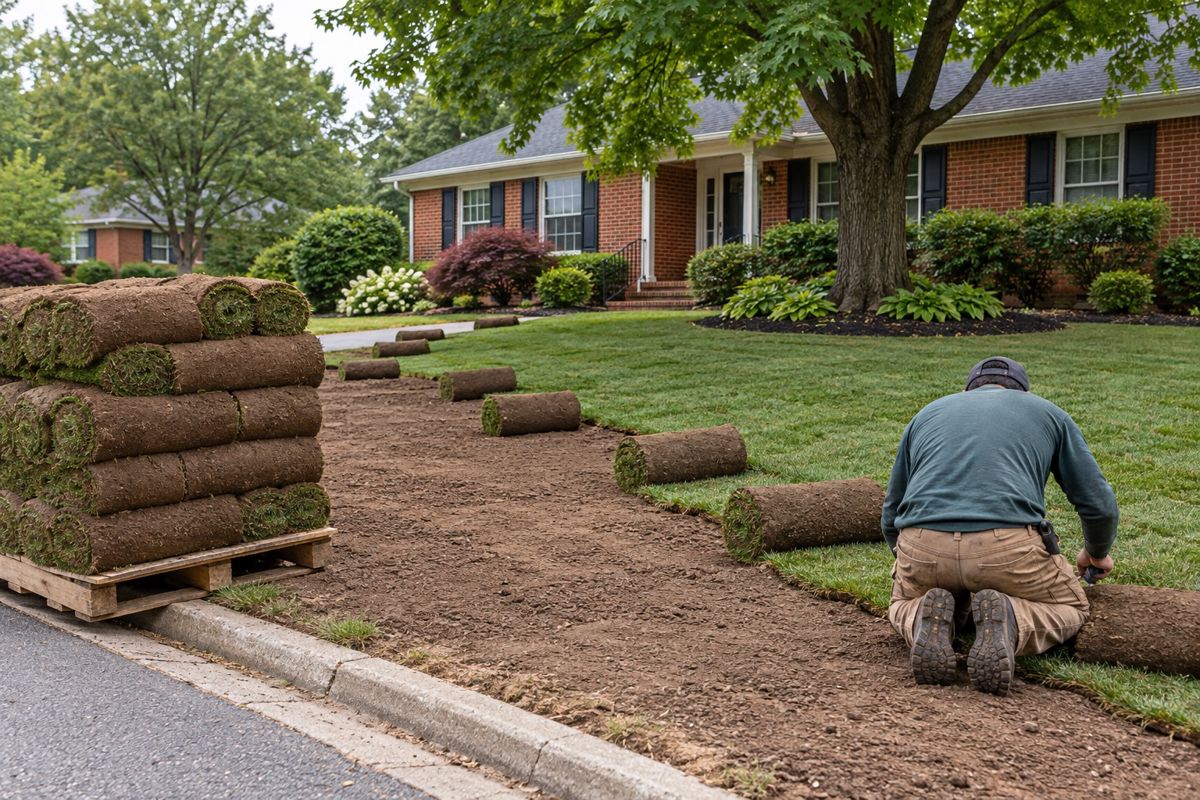
Workers laying rolls of green sod across prepared soil in a front yard

Sod installation in Richmond, VA

Sod installation in Richmond for a thick, even new lawn

Good soil prep is what makes new sod root well in red clay. We prepare the ground, lay the sod and tell you how to water it.

  • Full lawn replacement and patch jobs
  • Grass type matched to sun and shade
  • Written quote before work starts

Step 1 of 3

What do you need?

What does sod installation involve?

Sod is grass that has already been grown and is cut into rolls or slabs. Laying it gives you a green lawn the same day, without waiting weeks for seed to sprout. It also protects soil on slopes and keeps weeds out while the roots take hold.

A proper installation has more steps than most people expect:

  1. Remove the old lawn and weeds, or kill them off beforehand
  2. Test the soil to learn what lime or nutrients it needs
  3. Loosen compacted clay and mix in compost
  4. Grade the surface smooth so water runs away from the house
  5. Lay the sod in staggered rows with tight seams
  6. Roll it so the roots touch soil, then water right away

Skipping prep is why many new lawns fail. If you also want beds or a patio at the same time, see our landscape design page.

Which grass is right for a Richmond lawn?

Richmond sits in the transition zone, which means no single grass is perfect. Tall fescue is the most common choice. It stays green most of the year, handles partial shade and has deeper roots than other cool-season grasses. It does struggle in the hottest part of summer and needs water to look its best.

Zoysia and bermudagrass are warm-season grasses. They love full sun, handle heat and fill in on their own, but they go brown in winter. Zoysia makes a dense, soft lawn. Bermudagrass is tough and good for wear, but needs a lot of sun.

How to choose:

  • Mixed sun and shade, and green in winter: tall fescue
  • Full sun, high heat, and you can accept a winter tan: zoysia or bermudagrass
  • Heavy shade: consider shade-tolerant fescue, and talk with us about beds or groundcover in the deepest shade

For a full comparison, read our blog guide to grass types and sod for Richmond lawns.

What changes the price of sod installation?

We quote in writing after seeing the yard. The main factors are:

  • The area, measured in square feet, and the shape of the lawn. Many corners and curves add cutting and waste
  • The grass type. Some varieties cost more than others
  • Removal of the old lawn, weeds or debris
  • Soil work, such as compost, loosening and grading
  • Slope, since sod on a hill needs extra care and sometimes pinning
  • Access for delivery and equipment
  • Add-ons such as irrigation or drainage changes before the sod goes down

Seed is cheaper per square foot than sod, but it takes longer and carries more risk on clay and slopes. Sod gives a lawn faster and with less washout. Ask any contractor what is included in the price, especially soil prep and cleanup.

For an average yard, the sod itself is often laid in a day or two, after the ground has been prepared. The first couple of weeks after that are about watering, and the lawn needs time to root before heavy use. Weather and soil conditions can change the schedule, and we will tell you if they do.

Timing depends on the grass. Tall fescue sod usually goes down well in early fall or in spring, when heat stress is low. Warm-season sod such as zoysia or bermudagrass goes down well in late spring and early summer, when soil is warm. Laying sod during a heat spell means extra watering, and a missed day can damage it.

If you plan to add a sprinkler system, put it in before the sod goes down. Trenching later means cutting new turf. See our sprinkler and irrigation installation page for what that involves.

What should I expect on the day, and how do I care for new sod?

On installation day, a delivery of sod arrives, usually on pallets. The crew rakes the ground smooth, lays rows tightly, trims around beds and walks, and rolls the lawn. Water goes on right away. Keep pets and kids off while it roots.

Care for new sod follows a pattern:

  • Keep the sod and the soil under it moist for the first couple of weeks
  • Water in the morning when possible, to limit fungus in humid weather
  • Do not mow until the sod is rooted. Gently lift a corner to check. It should resist
  • After rooting, water less often but deeper to encourage roots to go down

Call us when the lawn is mostly weeds, bare, or patchy after summer, or when a new build left you with compacted ground and no grass. For the full list of services, visit our home page.

Request sod installation

Tell us what you need and we call you back.

No obligation.

Step 1 of 3

What do you need?

Questions about landscaping in Richmond

Should I use sod or seed?

Sod gives an instant lawn and holds soil on slopes, but costs more up front. Seed is cheaper and works for large, flat areas, but it takes weeks to sprout, can wash away in heavy rain and lets weeds in on bare clay. We can quote both and explain the trade-offs for your yard.

Can sod be laid on top of existing grass?

This is not a good idea. Roots need contact with soil, and old grass and weeds create a barrier that blocks it. The old lawn should be removed or killed, and the ground loosened and graded before sod is laid.

How soon can I walk on or mow new sod?

Keep traffic to a minimum for the first couple of weeks. Do not mow until roots take hold. Lift a corner gently to check. If it feels anchored and does not pull up, it is ready for a first light mow with a sharp blade. Roots develop at different speeds in different seasons.

Why did my sod turn brown or dry out?

The most common cause is too little water in the first weeks, especially in hot weather. Poor soil contact, compacted clay and weeds under the sod can also cause trouble. Humid weather may cause fungus on fescue. Tell us what happened, and we can look at the lawn and suggest steps.

Will new sod handle shade?

It depends on the grass and how much light reaches it. Tall fescue handles partial shade better than warm-season grasses. In deep shade under thick trees, no turf grass does well for long, and beds, mulch or shade plants may be a better choice. We will look at the light before suggesting a grass.

Free written quotes
Local crews
Reliable scheduling
Tidy job sites

Ready when you are Call now or request a quote online. Call for a free quote Get my free landscaping quote (804) 555-0150

How it works

1

Tell us about the yard

Size, goals and any photos.

2

Site visit and quote

We walk the property and put the price in writing.

3

We do the work

Scheduled crew, cleanup included.