
Skip to content
  • Free written quotes
  • Local crews
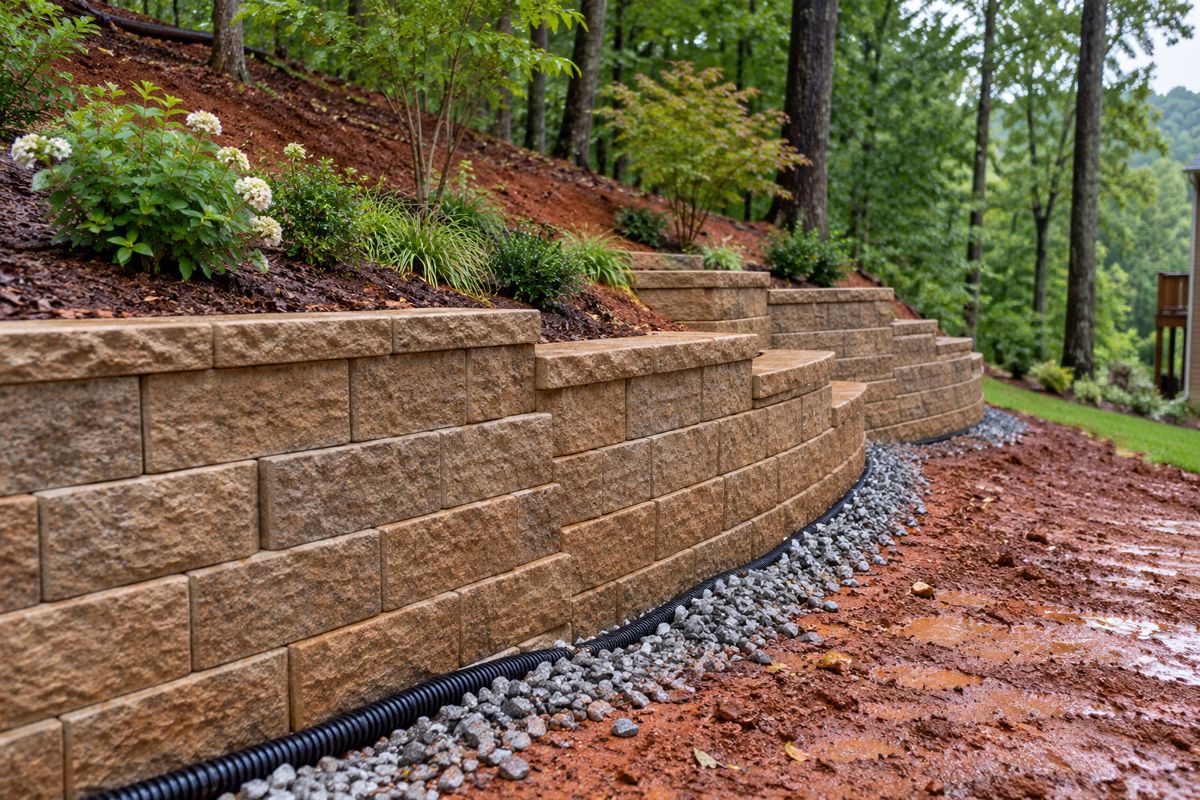
Tan block retaining wall with gravel and drain pipe on a clay slope

Retaining walls in Richmond, VA

Retaining wall contractor in Richmond for slopes and wet yards

A retaining wall only lasts if water can get out from behind it. We build walls with drainage and fix wet spots at the source.

  • Block and stone retaining walls
  • Drains, swales and gravel for wet yards
  • Written quote before work starts

Step 1 of 3

What do you need?

What does a retaining wall contractor in Richmond do?

A retaining wall holds soil in place where the ground changes level. In Richmond, we see them on sloped back yards, along driveways, beside patios and around steps. They stop erosion, create flat space and help control where water goes.

Good wall work has two parts. The first is the wall itself: a buried base, level courses, and the right material for the height and load. The second is drainage behind and around it. Many wall failures are not caused by the blocks. They come from water pressure building up in clay soil that cannot drain.

We build segmental block and natural stone walls, and we handle drainage fixes such as French drains, swales and downspout lines. If you want planting beds on the terraces, see landscape design. If a wall will sit next to a patio, see hardscaping.

Why does drainage matter so much with red clay?

Clay holds water. After heavy rain, the soil behind a wall can become saturated and heavy. That pressure pushes on the wall, and a wall built without a way for water to escape can lean, bulge or fail. Freeze and thaw cycles in winter add to the stress.

A well-built wall usually includes:

  • A compacted gravel base that sits below the surface
  • Clean crushed stone placed behind the wall, not clay
  • A perforated drain pipe at the bottom that leads water to daylight
  • Filter fabric to stop soil from clogging the stone
  • Reinforcement, such as geogrid, for taller walls

Drainage problems also show up without a wall. Common signs are water in the yard days after rain, soggy lawn in one spot, or water against the foundation. Fixes can include regrading, extending downspouts, a swale to carry water, or a buried drain line.

What changes the price of a retaining wall or drainage fix?

We quote in writing after seeing the site. The main factors are:

  • Wall length and height. Taller walls need deeper bases and more reinforcement
  • Material. Segmental block, natural stone and timber have different costs and lifespans
  • Excavation, haul-off of soil and access for machines
  • Drainage pipe, stone and where the water has to go
  • Engineering or permits, when the wall is tall or supports a structure or driveway
  • Steps, caps, lighting or planting added to the wall

Timber walls are cheaper but usually do not last as long in damp clay. If you want a wall that is going to hold, ask each contractor how it handles drainage. The answer says a lot.

Ask for line items for drainage and base. A low price that leaves these out often costs more later.

A short garden wall can be done in a few days. Longer or taller walls, or ones with drainage and steps, can take a couple of weeks or more. Wet weather often slows excavation and base work, so we give a schedule estimate with the quote and update you if conditions change.

Walls are generally built in any season the ground is workable. We prefer dry spells, because wet clay is heavy and hard to compact.

If your problem is a wet yard rather than a slope, the fix may be quicker. A downspout extension or short drain line can sometimes be handled in a day or two. A larger regrade or drainage system takes longer. We will look at the cause before suggesting the fix, rather than sell you a wall you do not need.

What rules apply, and when should I call?

Many localities require a permit and sometimes an engineer's design once a wall passes a certain height. The height limit varies, so check with the building office in your city or county. Walls that hold up a driveway, a building or a slope near a property line deserve extra care. Before any digging, Virginia 811 should be called to mark utilities.

Properties near streams, wetlands or the James River may fall under land disturbance or Chesapeake Bay protection rules. If you are close to water, ask the local planning office before you start.

Call us when:

  • A slope is eroding or soil is washing onto a path or driveway
  • An old wall is leaning, bulging or cracking
  • Water collects in the same place every time it rains
  • You want to turn a steep yard into usable level space

See our home page for the rest of our services.

Request retaining walls

Tell us what you need and we call you back.

No obligation.

Step 1 of 3

What do you need?

Questions about landscaping in Richmond

How tall can a retaining wall be before it needs a permit?

It depends on the locality. Many places require a permit or engineered plans once a wall reaches a certain height, often a few feet, or if it supports a structure or driveway. Check with the building office for your city or county before you start. We can help with the details.

What is the best material for a retaining wall?

There is no single best material. Segmental block is common and easy to repair. Natural stone looks good but costs more to build. Timber is cheaper but tends to rot in damp clay. The right choice depends on height, budget and look. We explain the trade-offs after we see the site.

Why is my retaining wall leaning?

The most common cause is water pressure behind the wall, either from poor drainage or a thin base. Taller walls without reinforcement and soil that was not compacted properly can also cause leaning. A leaning wall should be looked at soon, since it can get worse after heavy rain.

What is a French drain?

A French drain is a trench with gravel and a perforated pipe that collects water and carries it to a better place. It is used for wet spots, along walls and near foundations. It must slope the right way and have somewhere to discharge. Without that, it does not solve the problem.

Can you fix a wet yard without building a wall?

Often, yes. Many wet yards need only regrading, a downspout extension, a swale or a short drain line. We look at where the water comes from first. If a wall is not needed, we will tell you, and quote only what the yard needs.

Free written quotes
Local crews
Reliable scheduling
Tidy job sites

Ready when you are. Call now or request a quote online.

Call for a free quote

How it works

  1. Step 1

    Tell us about the yard

    Size, goals and any photos.

  2. Step 2

    Site visit and quote

    We walk the property and put the price in writing.

  3. Step 3

    We do the work

    Scheduled crew, cleanup included.