
Skip to content
  • Free written quotes
  • Local crews
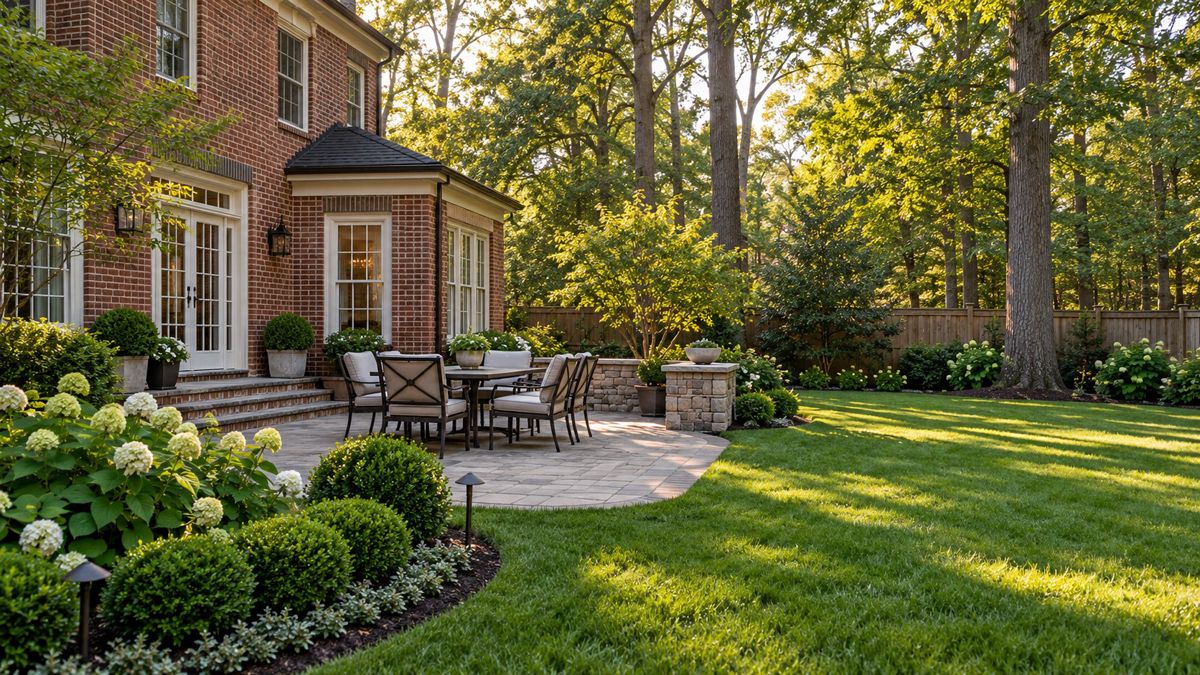
Brick Virginia home with new patio, planting bed and green lawn at golden hour

Newer homes and outdoor living in west Henrico

Landscaping in Short Pump for new builds and outdoor living

Patios, fire pits, sod and irrigation for the larger homes of Short Pump. Request a quote and we will confirm whether we can serve your address.

  • Five core yard services under one crew
  • Plans that suit red clay and humid summers
  • Written quote before work starts

Step 1 of 3

What do you need?

Free written quotes
Local crews
Reliable scheduling
Tidy job sites

Short Pump: newer homes, builder-grade yards

Short Pump is in the western part of Henrico County, and most of its housing is newer than the older city neighborhoods. Large two-story homes sit on mid-sized lots in planned communities, many with golf, trail or lake amenities nearby.

New construction leaves a particular legacy in the yard. Builders strip and regrade the lot, and the topsoil that remains can be thin, with compacted clay beneath it. Basic sod and a few foundation shrubs are installed, and then owners are left with a lawn that browns in July and beds that never quite fill in. Many Short Pump calls are about fixing exactly that, once the homeowner knows how they want to use the yard.

Broad Street, I-64 and the planned communities

West Broad Street and I-64 run along the southern edge, with shopping and offices clustered near them, and neighborhood roads curve off into the subdivisions. Streets tend to be wide, driveways long enough for equipment and lots regular in shape.

That regularity helps with design. Rectangular back yards can hold a patio, a lawn and a planting edge in a clean layout, and good access means pavers and soil can be delivered close to the work area. The trade-off is drainage. Neighborhoods built on graded clay often have lots that shed water onto each other through shared swales, and a poorly graded corner may stay wet for days after storms.

How our five services apply to Short Pump homes

Newer neighborhoods tend to need a particular mix of work, and each of these has its own page.

Start with a landscape design that decides where the patio, lawn and planting belong. Outdoor living areas with seating walls, paver patios and fire pits, lead naturally from the back door. Thin or patchy turf can be reset with sod installation after the soil is improved.

Where water collects or a grade change needs support, retaining walls and drainage provide the structure. A properly zoned irrigation system keeps all of it healthy through a Virginia summer. Doing these in the right order saves money, because a patio built first can block the route for a sprinkler line.

Compacted ground is the hidden reason many new-construction lawns struggle. Roots cannot push into hard clay, water runs off instead of soaking in, and grass shows stress at the first dry spell.

The remedy is preparation: loosening the soil, adding organic matter and grading it so water drains. Done before sod goes down, it makes a visible difference. Done afterward, it is harder and more expensive. Similar logic applies to planting beds, where amending a wide area works better than filling a small hole with good soil in a sea of clay. We explain soil work in the quote, and we note what it adds.

Permits, HOA review and utilities

Short Pump communities frequently have architectural review boards, and these often cover patio size, materials, fire features and fencing. Fire pits may also be subject to county rules, and gas lines need a qualified trade.

Before digging, Virginia 811 is contacted so utilities are marked. Newer neighborhoods can have buried cable, irrigation mains and drainage structures close to the surface, and their positions are not always marked on older plans. If your project includes a wall, a larger patio or significant grading, we flag the likely approvals during the visit and give you a realistic sense of timing.

Asking for a quote in Short Pump

We serve Short Pump without being based there, and the quote request is how availability gets confirmed.

  1. Call (804) 555-0150 or send the form with your community name.
  2. Describe the project and the problems you have noticed in the lawn or beds.
  3. Share any HOA guidelines or builder plans you have.
  4. We visit and look at soil, grade and access, then discuss ideas.
  5. You receive a written quote that lists materials and phases.

If your community has a design review board, ask us to prepare a simple sketch for the application. Many applications move faster when the drawing shows dimensions and materials clearly.

Get a quote in Short Pump

Tell us what you need and we call you back.

No obligation.

Step 1 of 3

What do you need?

Questions about Short Pump

Why does my builder-installed lawn look patchy?

Thin topsoil, compacted clay and inconsistent watering are common culprits. Sod laid on hard ground roots shallowly and struggles in summer. Improving the soil, aerating and correcting watering can restore it. When damage is widespread, replacing the lawn after soil preparation may be a better use of money than repeated patching.

How can I plan a patio, fire pit and lawn together?

Begin with how you use the space, then place each feature to allow traffic, privacy and drainage. The patio usually sits near the house, the fire pit a few steps away and the lawn in the open center. A design sketch shows how pieces fit, and helps you phase the work.

Do gas fire features need extra approval?

They can. Gas lines must be installed by a qualified trade, and local codes or HOA rules may apply to the size and placement of the feature. Wood-burning fire pits may have separate restrictions on size, distance from structures and burn days. We can build the pit and base, and we recommend checking the requirements early, before you buy a burner or a ring.

When should an irrigation system go in?

Ideally before sod or planting, since trenches in a finished lawn mean repair. Early planning also lets us place heads and valves where they will not interfere with a patio or wall, and sleeves can be laid under paving before it is built. If the lawn is already in, systems can still be installed with careful trenching and patching.

Is a large paver patio hard to maintain?

Pavers are manageable. Sweep debris, remove weeds from joints and refill with polymeric sand when it washes out. If a section settles, individual pavers can be lifted and reset without rebuilding the whole patio. A well-built base is the key to low maintenance, so we focus on preparation and drainage beneath the surface.

Ready when you are Call now or request a quote online. Call for a free quote Get my free landscaping quote (804) 555-0150